 by
by 
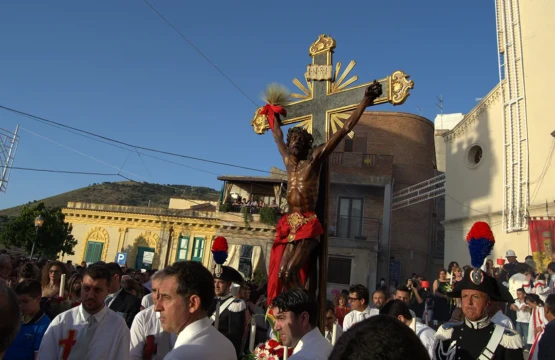
Events and festivals not to be missed in the Madonie
- May 15, 2026
- Blog
The prime location of our properties between Cefalù and Lascari offers our guests a rare opportunity: to experience the sophistication of the... Read More
Cefalù Cathedral is one of the greatest symbols of Arab-Norman architecture in Sicily: for anyone visiting Cefalù, a visit is an absolute must. Built in 1131 at the behest of Roger II, the cathedral has been a UNESCO World Heritage Site since 2015. Its massive structure, reminiscent of a fortress, dominates the main square and houses some of the Mediterranean’s most important artistic treasures.
Entry to the central nave is usually free, but to access the historic and panoramic areas (cloister, towers and treasury), you must choose one of the tour routes. There are three main options, designed for those wishing to explore sacred art in depth or those who prefer to enjoy the view:
What immediately catches the visitor’s eye upon entering is undoubtedly the Christ Pantocrator: within the apse shines the Byzantine mosaic from 1148, considered one of the masterpieces of the Middle Ages; its main feature? Christ’s gaze seems almost to follow the visitor to every corner of the cathedral!
Be sure to pay attention to the Cloister too: situated next to the Basilica, it is a space of rare architectural beauty, where each twin capital tells a different story through detailed sculptures. Finally, before you leave, don’t forget to take one last look at the façade as you exit the cathedral: framed by the two bell towers, it reflects the dual nature of the cathedral – a place of worship and a Norman defensive stronghold.
Address: Piazza del Duomo, 10, Cefalù.
Opening hours: generally open from 8.30 am to 12.30 pm and from 3.30 pm to 6.00 pm. We recommend checking for any changes due to liturgical services.
It is said that Roger II had the Cathedral built as a votive offering after surviving a devastating storm and landing unharmed on the beach at Cefalù. Although he had intended the Cathedral to be his royal burial place, his remains were later transferred to Palermo at the behest of Frederick II, leaving the majestic, now empty porphyry sarcophagi in Cefalù.
The prime location of our properties... Read More
There is a Sicily that cannot... Read More
Cefalù Cathedral is one of the... Read More